


Frequently Ask Question
Is Grand Cayman a safe place to visit?
-
Yes, Grand Cayman is considered very safe, often ranked as one of the safest islands in the Caribbean. While petty crime can occur as in any location, the island is generally very family-friendly, and many visitors return year after year.
Do I need a visa to enter Grand Cayman?
-
Citizens of the United States, Canada, Great Britain, and most EU countries typically do not require a visa. However, passport holders from many Asian, African, and Middle Eastern countries should check the official Cayman Islands government website for specific visa requirements before traveling.
What is the driving situation like on the island?
-
Driving in the Cayman Islands is on the left side of the road, which is different from the US. However, the roads are well-maintained, and maps and signage are clear, making navigation relatively easy.
Is public transportation available?
-
Yes, Grand Cayman has a public mini-bus system that serves all districts. Buses are easily identified by a colored circle with a number. You can flag down a bus anywhere along its route, and there are designated bus stops on major roads. Fares range from CI$2 to CI$2.50 for short trips, CI$3.50 to the East End, and CI$8 to Cayman Kai. If traveling to the end of a line, it's advisable to confirm the return bus schedule with the driver, especially for later in the day.
Do I need to rent a car?
-
Whether you need to rent a car depends on your travel style and plans. Grand Cayman offers a public bus system and taxis. A rental car provides more flexibility and independence for exploring the island at your own pace. Consider your itinerary and preferences when making your decision.
Does Grand Cayman have ride-sharing services like Uber or Lyft?
-
No, Grand Cayman does not have Uber or Lyft. The Cayman Islands government has regulations in place that currently do not permit these ride-sharing services to operate.
What currency is used in Grand Cayman?
-
The Cayman Islands have their own currency, the Cayman Islands Dollar (CI$). The US Dollar is also widely accepted at virtually all businesses and by tour operators, and most accept major credit cards. The exchange rate is fixed at US$1.00 = CI$0.80 (and change is typically given in CI$).
Is the tap water safe to drink in Grand Cayman?
-
Yes, the water in Grand Cayman is safe for drinking and cooking. The Cayman Water Authority oversees two water purification companies that supply fresh drinking water across the island through underground pipes to all properties.
When is hurricane season in Grand Cayman?
-
Hurricane season in Grand Cayman officially runs from June 1st to November 30th.
Are there hospitals or medical facilities nearby?
-
Yes, Grand Cayman has several modern and well-equipped medical offices, clinics, and hospitals conveniently located throughout the island, providing easy access to excellent medical care. The Cayman Hospital on Hospital Road is the designated facility for emergency care. In case of immediate emergencies, please dial 911.
-
Total Health (Clinic & Pharmacy): 802 West Bay Road | Clinic: (345) 333-2222 | Pharmacy: (345) 333-4444
-
Health City Cayman Islands (Medical Office): 9 Forum Lane | (345) 640-4040
-
Cayman Hospital (Hospital): 95 Hospital Road | (345) 949-8600
-
Doctor’s Hospital (Clinic): 16 Middle Road | (345) 949-6066
Which airlines fly to Grand Cayman?
-
Several major airlines offer regular flights to Grand Cayman from the United States, including American Airlines, United Airlines, Southwest, and Delta. If you are traveling from near Miami, New York, Tampa, Denver, or Los Angeles, Cayman Airways also offers direct flights. From Canada, you can find flights via Air Canada, WestJet, American Airlines, or United Airlines.
What time zone is Grand Cayman in?
-
Grand Cayman operates in the Eastern Standard Time Zone (EST). Importantly, the Cayman Islands do not observe Daylight Saving Time (DST). This means that for half the year, the time in Grand Cayman is the same as EST in the US, but when the US switches to EDT, Grand Cayman's time remains the same and aligns with the Central Time Zone in the US.
The Cayman Experience
Discover a wealth of local insight and rich island heritage right here in Grand Cayman
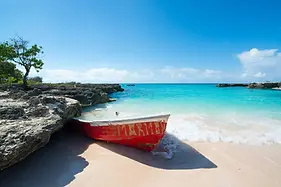
Discover the Magic of the Cayman Islands

Prepare for an unparalleled Caribbean escape in the Cayman Islands, a destination celebrated for its breathtaking turquoise waters and pristine powder-white beaches. Here, adventure and relaxation go hand in hand, with endless opportunities for snorkeling and scuba diving in vibrant coral reefs, exhilarating boat tours, world-class sport fishing, and so much more.
Located in the Western Caribbean, approximately 500 miles southwest of Miami, Florida, the Cayman Islands are a British Overseas Territory within the British West Indies. Our beautiful trio of islands – Grand Cayman, Cayman Brac, and Little Cayman – are home to around 85,000 residents, with the bustling capital of George Town situated right here on Grand Cayman, where Bon Suites Cayman also calls home.
Beyond its natural beauty, Grand Cayman is renowned as the Culinary Capital of the Caribbean, and for good reason! The island has attracted exceptional culinary talent, promising delightful and diverse dining experiences across the island.
With inviting year-round temperatures averaging 24-28ºC (72-88ºF), the Cayman Islands offer the perfect climate for an unforgettable beach vacation. Come and experience the magic for yourself!
The Unique Charms of the Cayman Trio

The Cayman Islands are comprised of three distinct islands, each offering its own unique charm and appeal. Grand Cayman, the largest, spans approximately 76 square miles. This low-lying island stretches about 22 miles in length and averages 4 miles in width, with its highest point reaching a modest 72 feet above sea level. Here on Grand Cayman, you'll find our vibrant hub and a wealth of experiences.
Approximately 89 miles northeast of Grand Cayman lies Cayman Brac, named for its impressive 153-foot bluff ("Brac" meaning bluff in Gaelic). This island, about 12 miles long and averaging 1.25 miles wide, covers roughly 14 square miles. With its dramatic terrain, Cayman Brac offers the most spectacular landscapes of the three, making it a haven for adventure-loving nature enthusiasts, particularly those interested in rock climbing and exploring its diverse flora and fauna.
Just five miles west of Cayman Brac is Little Cayman, a tranquil escape approximately 10 miles long and just over a mile wide, encompassing about 10 square miles. Similar to Grand Cayman, Little Cayman is largely low-lying, with a few areas on its north shore rising to about 63 feet. Home to fewer than 160 residents, Little Cayman provides visitors with an experience of secluded adventure, boasting glistening white-sand beaches and the intimate feel of a private island. It's also renowned as a world-class diving destination, particularly for its pristine Bloody Bay Wall.
Discover the Wonders of Cayman Wildlife

The Cayman Islands, peaks of a limestone mountain rising dramatically over 7,500 meters from the ocean floor as part of the Cayman Ridge, boast a unique and fascinating array of wildlife. The porous nature of the limestone bedrock plays a crucial role in creating the world-renowned diving conditions, as water filters through it rather than running off.
Contributing to the islands' stunning beaches are parrotfish, nature's sand creators. These colorful fish graze on rock and coral, and in the process, excrete the fine sand that makes our shores so inviting.
Among Cayman's remarkable endemic species is the magnificent blue iguana, a vibrant blue dragon found nowhere else on Earth and considered incredibly rare.
In the tranquil waters of North Sound on Grand Cayman, an extraordinary gathering occurs at 'Stingray City.' Here, wild Southern stingrays congregate in large numbers, offering a unique opportunity to safely interact with these gentle creatures in their natural habitat.
The surrounding waters are also home to three species of sea turtles: the green, the loggerhead, and the hawksbill, all playing vital roles in the marine ecosystem.
Surprisingly, the only native land mammals in the Cayman Islands are bats. These nocturnal creatures have diverse diets, with some feeding on fruits like wild almonds, while others are insectivores, preying on moths, beetles, and mosquitoes.
Birdwatchers will delight in the over 230 species of birds found throughout the islands. Notably, Little Cayman is home to the largest colony of red-footed boobies in the entire Western Hemisphere, a truly spectacular sight.
Another unique resident of Grand Cayman is the Grand Cayman pygmy blue butterfly (Brephidium exilis thompsoni), a tiny and delicate subspecies found nowhere else in the world.
Finally, adding a touch of magic to the islands is the rare phenomenon of bioluminescence. In a secret bay on Grand Cayman, a high concentration of plankton, thriving alongside red mangroves and minimal water movement in the sheltered environment, creates a breathtaking natural light show. This extraordinary spectacle is best witnessed on the darkest of nights.
Good to Know: Essential Information for Your Cayman Visit

To ensure a smooth arrival, please note that all guests visiting the Cayman Islands are required to present a valid passport and complete an immigration form upon arrival. If you have any items to declare, a customs declaration form will also be necessary. Additionally, all visitors must possess a return airline ticket.
When it comes to currency, the official Cayman Islands dollar (KY$) has a fixed exchange rate of KY$0.80 to US$1.00. However, you'll find that the US dollar is widely accepted throughout the islands for your convenience. Automated Teller Machines (ATMs) are readily available and dispense both Cayman Islands dollars and US dollars.
For payment options, major credit cards such as American Express, Discover, Mastercard, and Visa are accepted at most establishments across the Cayman Islands.
To remember your incredible trip, consider bringing a piece of Cayman home with you. You'll find a delightful array of locally produced goods available in various stores, ranging from unique marshmallows and handcrafted candles to locally distilled rum.
As we strive to remain a premier Caribbean destination, the Cayman Islands places a strong emphasis on sustainability. Littering is heavily enforced, and strict marine conservation laws are in place to protect the natural beauty of our islands and their surrounding waters for generations to come. We appreciate your cooperation in preserving our pristine environment.
The dominant religion in the Cayman Islands is Christianity, with a diverse range of denominations represented. You'll find various churches including United Church (Presbyterian and Congregational), Anglican, Jehovah Witness, Baptist, Church of God, other Protestant, Roman Catholic, and Seventh Day Adventists throughout the islands.